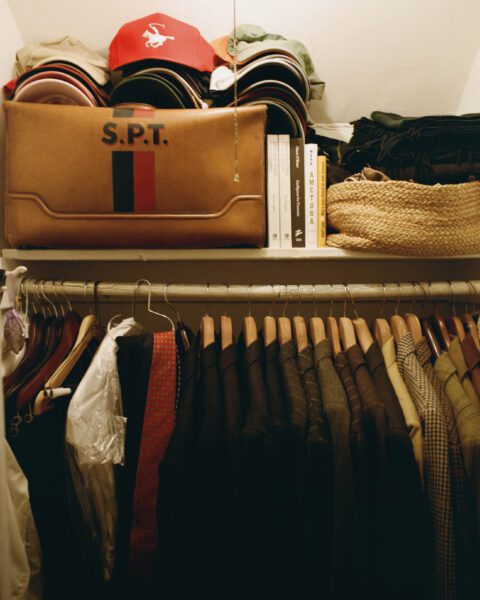
Chez Stéphane Timonier
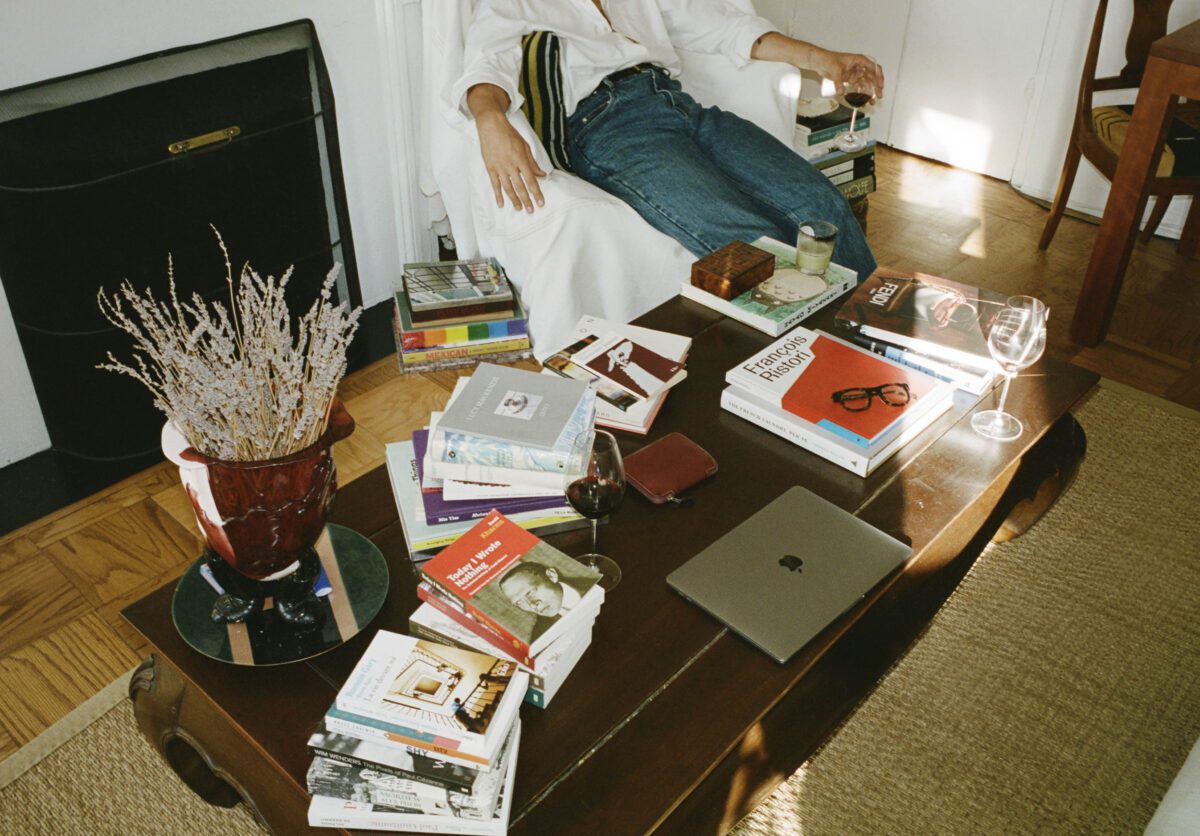
- Photography by Mikkel Gregers Jensen
- Styling by Daniel Lonnstrom
- Words by Lauren Davis Britvan
1
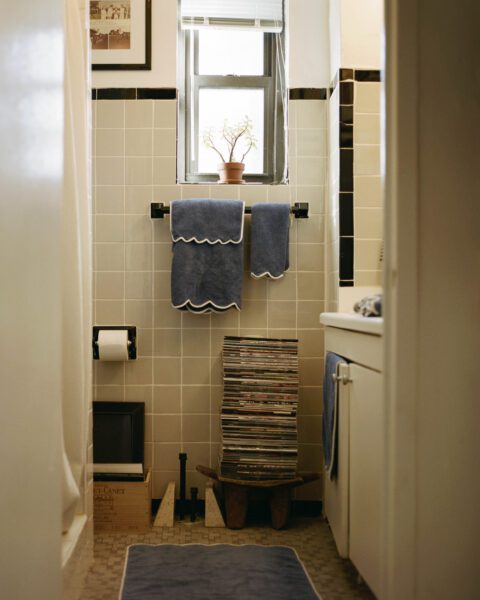
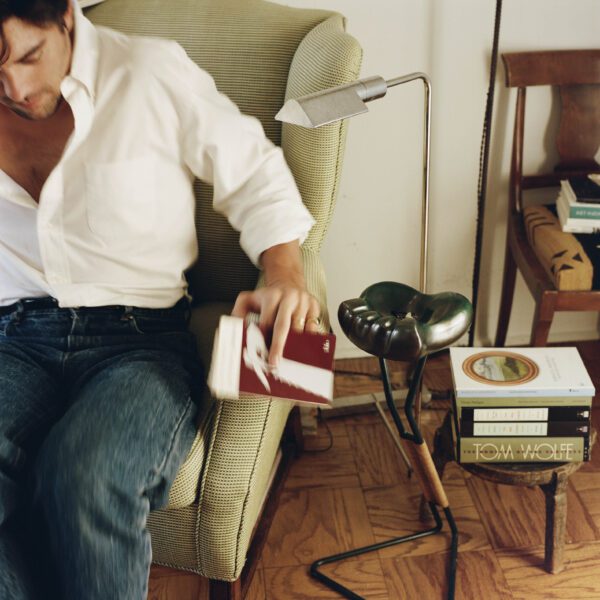
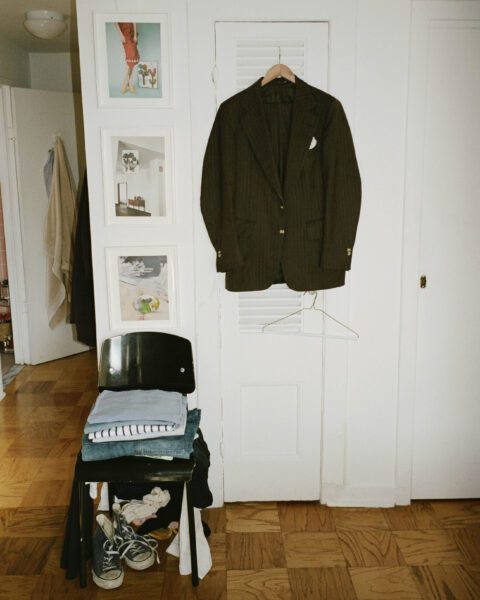
Perched above a row of brownstones, in a neighborhood that feels largely untouched by time, the Timonier apartment carries a quiet continuity with the past. Crown moldings remain intact; a pink-tiled bathroom, a blue one, and glass-handled doors still live on from the late 1920s. From this luminous vantage point, Stéphane’s sensibility, alongside his wife Giza’s, comes into focus.
Our conversations move easily between interiors and identity, returning to the idea that how one dresses presents a specific self to the world, while how one composes a room reveals something more interior. A structure of thought, a way of organizing the confines of one’s own mind, shaped as much by aspiration as by instinct. As Stéphane, half-American and half- French, expressed, “It’s not that people are different in different places, but I believe that we have different aspirations in different places. An apartment is very much a reflection, whether you want it to be or not.”
For Stéphane, spaces are assembled over time, through a myriad of contributions. Books, textiles, artworks accumulate with a serene intentionality, layered with tactility and care, shaped as much by inheritance as by instinct. He speaks of being formed “by osmosis,” of absorbing from his parents and grandparents a sensitivity to language, craft, and objects, long before he could fully articulate their meaning.
There is a clarity in how he approaches both collecting and the gallery model itself. We share an affinity for those who lean into specialization, where depth creates its own kind of intimacy. At Galerie Timonier, exhibitions often unfold through a sense of scenography. Constructing environments that feel at once lived-in and slightly fictional, yet always anchored in the psyche of a collector deliberate in his pursuits.
And then there are the American diners, recurring motif, almost a philosophy. The quiet ritual of a pot of coffee, the democracy of a counter, the ease of returning again and again, the “can-do attitude” of a diner with its own codes. It reflects something essential in his worldview: an active, rather than passive, pursuit of comfort. A belief that spaces, whether a gallery, an apartment, or a diner, should invite presence, conversation, and an unstudied kind of ease.
In the end, Stéphane’s home feels less like a declaration and more like a quiet annotation of where he has been, and what he is still moving toward. There is a sense that the story is ongoing, still unfolding, room by room, chapter by chapter.
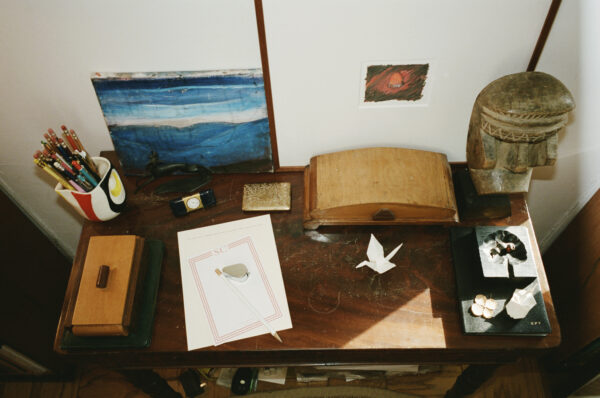
Lauren Davis Britvan: Lauren Davis Britvan: Hello Stéphane, how are you feeling at the start of a new year?
Stéphane Timonier: I’m feeling pretty well! The first few months of the year are among my favorites: there is little going on, or perhaps little I would like to partake in – this tends to be when I make the greatest dent in any kind of movie or reading list I seem to constantly be making.
LDB: I recently saw David Byrne in concert again, performing ‘My apartment is my friend’ – A sentiment I feel only New Yorkers truly grasp. You have collected many pieces marked by time.; which of your acquisitions offer you the deepest sense of comfort at home?
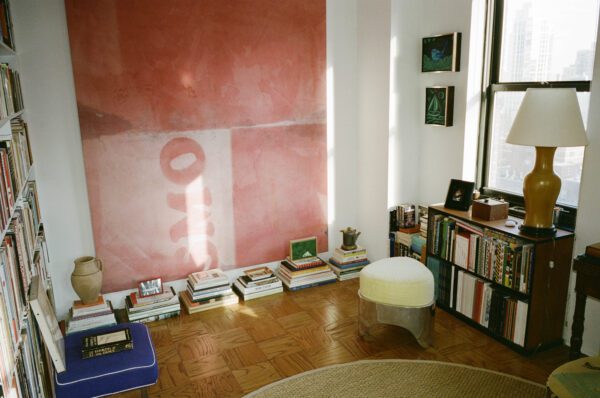
ST: Like many New Yorkers, I’ve moved apartments a fair deal until my wife and I really settled in the one where we currently reside. The first consideration for me is related to our books. I spent the first week arranging and then rearranging the bookcases and putting up artworks. Those feel more essential than other furnishings to contribute to that sense of comfort at home and, ultimately, I tend to spend a lot more time thinking about, learning about, and acquiring artworks and printed matter than anything else.
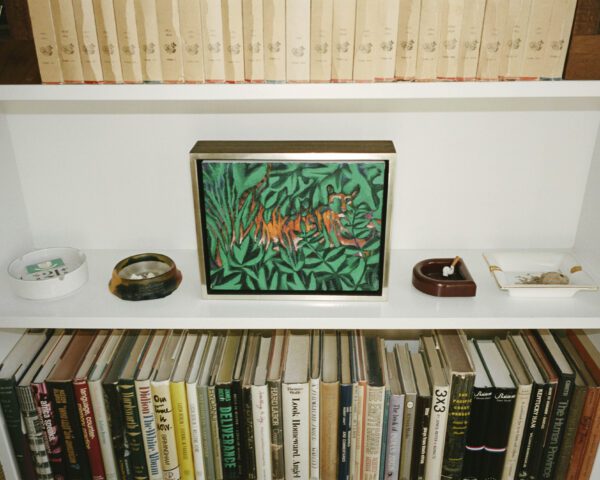
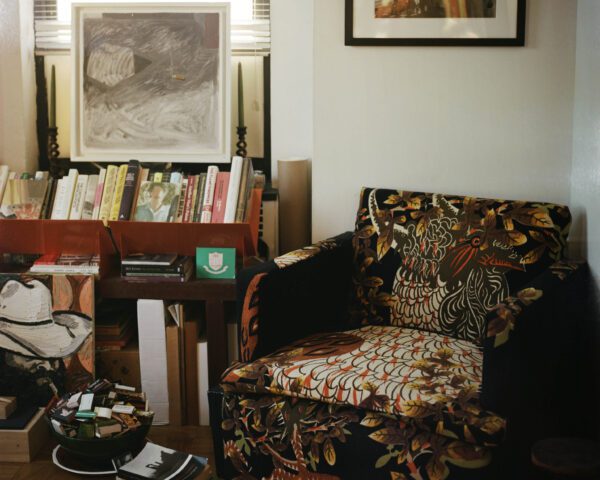
LDB: When you think about the atmosphere you, along with your wife, have created for yourselves, what have been the primary influences shaping your space?
ST: I don’t think we so much set out to achieve any specific kind of atmosphere; perhaps we simply weren’t conscious of it at the time. We’ve played with all kinds of permutations – at first, I’d reassured her the library would be a dining room – and this has resulted in many small vignettes which cumulate into a cohesive whole. Ideally, every part of the apartment would be arranged in such a way that anyone could sit and pick up something to read.
LDB: You mentioned that your mother owned a gallery. I admire those who grew up with creative models in their circle. People who craft a life in the arts. How did her world shape your sense of what was possible for you?
ST: She did! As a child, I spent many afternoons sitting in the back doing homework. My mother is without a doubt one of the main reasons I knew it was a possibility to operate a gallery/program. I still get as excited during studio visits or the installation process because it’s reminiscent of what I have been around at one point or another. More than once, she has given me indispensable advice and led by example through her open-mindedness and the elasticity of her tastes.
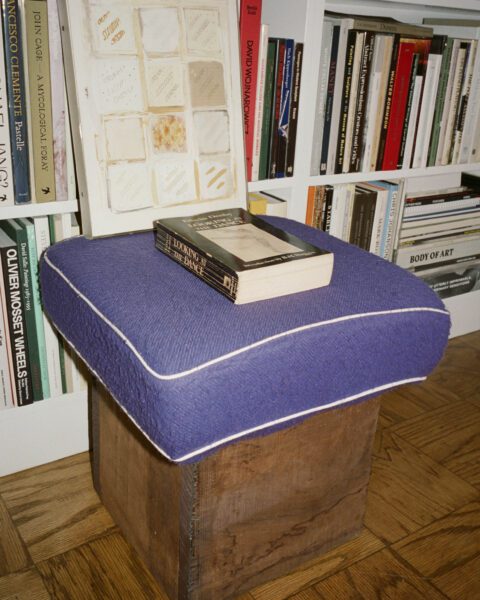
LDB: The current exhibit at Galerie Timonier engages with local artisan Teague Costello of Teague’s Path. How does this relationship speak to the gallery’s ongoing dialogue with contemporary design and material culture?
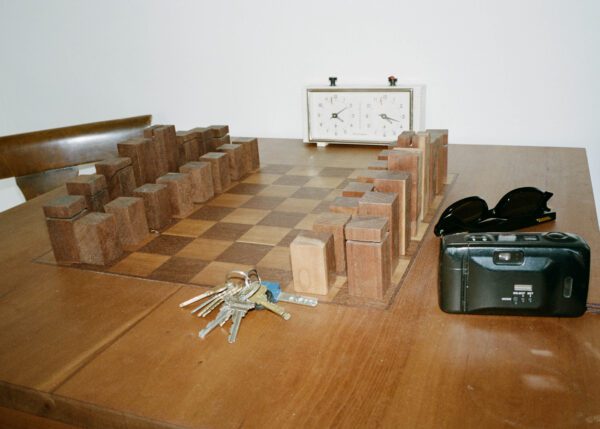
ST: The exhibition with Teague came as an idea my friend Alex Adler and I discussed after an exhibition I’d done last year with Bennet Schlesinger of Light Song Exchange. I like the idea of proposing something with a little levity at the end of the year. These kinds of exhibitions also make room for me to show bodies of work (Old Master Mannerist prints; paintings by post-Impressionists; drawings by American realists etc…) that I would not necessarily have otherwise. The original concept was to reclaim the gallery space’s domesticity and, by doing so, to scratch some kind of an itch in the back of my head. When designing it (the gallery), I had a clear idea of what I wanted and performed more subtractions than I did additions – the same thing happened when it came to furnish it with either Teague or Bennet. They were both very gracious in allowing me to come up with the concepts which they then reified. The ideas for this most recent show began after I stumbled across Paul Holdengräber’s dissertation on the act of collection. I was curious to create an environment in which a fictitious collector – motivated by similar principles of collecting – lived: how would they arrange their room? What utilitarian necessities should be addressed? What sort of artwork would they most likely have collected? All of those questions seemed to answer themselves over time and gave shape to the exhibition.
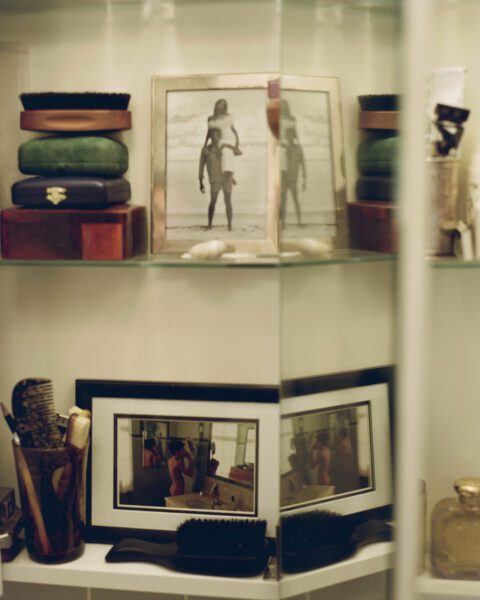
New York and New Yorkers don’t seem to attribute much importance to where one comes from. I’ve never thought of reconciliation in that way, it is one of the most generous environments I know: it returns tenfold whatever you invest in it. Whatever one might be inquisitive about, there is an answer and there is a community.
LDB: You were raised in Geneva with deep European roots, yet you’ve found your ground in New York, a city whose version of modernity and art culture is entirely its own. How do you reconcile your personal curiosities with the broader trends and expectations that circulate here?
ST: New York and New Yorkers don’t seem to attribute much importance to where one comes from. I’ve never thought of reconciliation in that way; it is one of the most generous environments I know: it returns tenfold whatever you invest in it. Whatever one might be inquisitive about, there is an answer and there is a community.
LDB: How did the home you grew up in, and the places you visited early on, shape your understanding of how art and surroundings can inform, elevate, and even soften the way one moves through the world?
ST: I am having a hard time answering your question straight-on, but some images which come to mind include: my paternal grandparents’ collections of objects and furnishings from the 18th and 19th centuries; the feeling of getting to choose the color of my teenage bedroom (of all possible choices, I decided on a horrible kiwi green); artworks leaning on the wall before being installed in a hallway; movies by my father’s favorite filmmakers like Sautet or Almodóvar; Parish-Hadley-esque upholstery skirting; linens my mother would bring back from stores in NYC. These, among many, many more, participate in populating a mental reconstruction of what my childhood home felt like.
LDB: Who are some collectors or gallerists whose approach you admire?
ST: Collectors: Konrad Fischer; Luigi Lineri; Dylan Brant; Peter Brant; Bill Katz; Andy Warhol; Azzedine Alaïa; Zhenya Posternak; Erik Heywood; Ghislain Mollet-Viéville; Marc Hotermans; Noah Wunsch; Alan Grizot; Lillie P. Bliss; Doriano Navarra; Abel Sloane; Charles and Marie-Laure de Noailles.
Gallerists/Dealers: Bridget Donahue of Hoffman Donahue; Peter Freeman; Miguel Abreu; Konrad Fischer; Berthe Weill; Marc Blondeau; Alain Tarica; Nicole Timonier-DeKwiatkowski.
LDB: Is there an artist or design movement currently occupying your attention more than others?
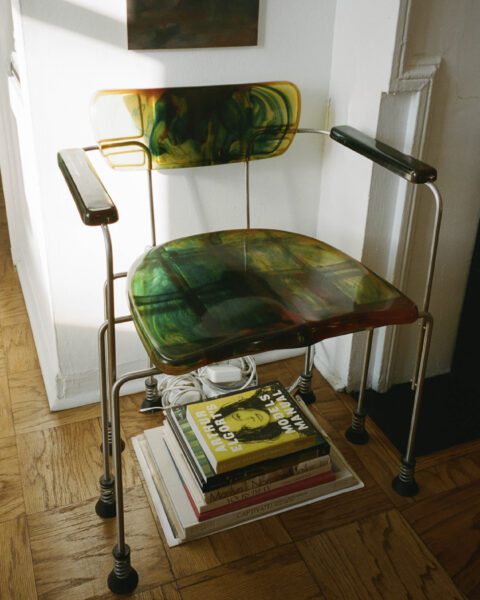
ST: Like anyone else, it changes all the time. At the moment, I suppose I’ve been thinking a little more about Anthroposophic furniture and Art Nouveau (Louis Majorelle and Émile Gallé in particular). Neither of which I have collected much outside of catalogs.
LDB: Do you remember the first artwork you ever purchased? What drew you to it?
ST: Perhaps not what you were thinking about when you say artwork, but the first object of desire I can really recall striving to acquire is a Fiesta Red Fender Stratocaster guitar. It remains one of the most beautiful things I get to live with.
LDB: If money were irrelevant, whose work would you collect with complete abandon?
ST: If money were irrelevant, I am not sure I could limit myself to a single individual’s work. I often fantasize, however, about the architectures required to house and arrange such a collection – one unbridled by finances. Most often I picture some kind of free-standing structure which is independent from wherever it is we’d be living: a small pavilion in a pastoral setting to house the book and record collections. It would be furnished ascetically and I love to think it would feature one really, really strong artwork, but I am not so confident I could exercise such restraint. So maybe two?
LDB: What are the treasured objects or personal items in your home that you feel define you, and the space in a meaningful way?
ST: I like to say that my library is a hard drive that doesn’t crash: there is a great little exemplum that I’ve heard told in a few different ways: a renowned book dealer hosts a few guests for dinner. His dining room looks more like a study hall – printed matter everywhere the eye can rest. All throughout the meal, he notices a guest scowling and when he asks them if the food is perhaps not to their liking, they answer that the food isn’t the issue; the books are. Why would he own so many? Had he even read all of them? The dealer pauses, smiles, and replies: “I have not, and as a matter of fact, nor have I drunk all the wine in my cellar.” A collection of books is not necessarily a factual portrait of their owner (as much as I would like that) but more of an aspirational one. There are many books I live with that are, for the moment, beyond me in more ways than one.