Chez Suzanne

- Photography byAlexandra Nataf
- Styling & Interview ByLauren Davis Britvan
- Words by Nicholas Goodman
3
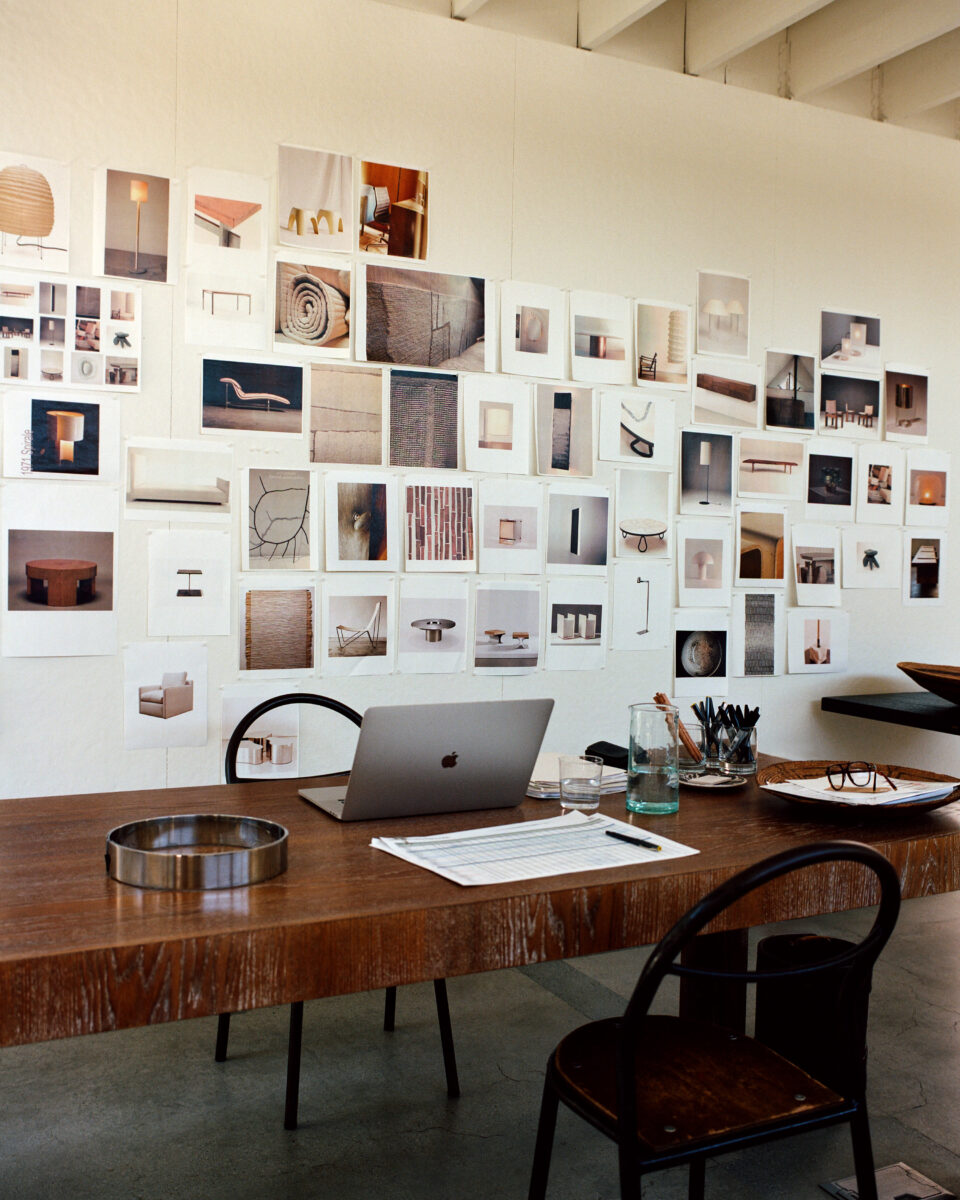
When the gallerist Suzanne Demisch places her lens on a space she doesn’t just see ways to furnish it—she sees the chance to discover a narrative. Suzanne’s work reflects her fascination with the passing of time, through objects that convey a sense of the lives they’ve led, with a taste that skews to the unconventional and the rare—pieces that were formed more so out of creative expression than simply function. That approach is intuitive, but always academic, with an ever sharp focus on provenance and pedigree.
When Demisch went looking for a home, she sought a space steeped in the history of post-war New York that was befitting her own modernist touch. Here, in the East Village, she found exactly what she was looking for: a place seemingly lost to time. The apartment had been owned by the photographer and painter, Saul Leiter, for more than a half century, and appeared to have been spared from the frantic development of the city around it.
While Demisch Danant, the legendary design gallery she cofounded alongside Stephane Danant, has been celebrated for curating exhibitions of exceedingly high precision, her apartment is imbued with the warmth of a family home. Where one might imagine objets d’art chosen for their status, one finds an interior appointed for function and ease that is highly personal. If Demisch’s home is her story, it is one that conveys the thoughtfulness of the found and hand-touched. What is made imminently clear is that her choices
are inward, each an emblem of the kind of real connoisseurship one gains from a life well-lived.


Lauren Davis Britvan: Your home formerly belonged to the late photographer and painter, Saul Leiter. May you share how you came to live in a place with such a rich and layered provenance?
Suzanne Demisch: I first came to NYC in 1993 from Cape Cod and landed in the East Village, closer to Tompkins Square Park. I really loved walking through the neighborhood and was particularly interested in 10th Street between 2nd and 3rd. It held such history. When I went to look to buy an apartment in
2000, there was a studio available on that block and I bought it, eventually renovating it in 2006. The unit next to mine was Saul Leiter’s, and when he passed in 2013, I ended up buying it one year later.
LDB: Would you say this space has informed an evolution in your taste or preferences for certain objects or design elements?
SD: In some form, the building itself holds such weight. Originally built in 1854 and renovated in the 1940s, it has been home to artists ever since. I knew I didn’t want to change the architecture and historical background, but I wanted to find a way to blend my personal collection with the space.


LDB: Is there a room in your home that you feel cannot be fully captured by a photograph alone?
SD: My bedroom. The doors, window frame, and baseboards have the original paint from Saul that I had hand-cleaned during construction. The cream has such a texture that the light from the large windows emphasizes it in a mesmerizing way.
LDB: How do you envision this space evolving in the future? Are there any particular elements you hope to explore further?
SD: In truth – no. I am content where the space is at now and I don’t see any future evolutions.
LDB:: When you were first starting out, how did you learn to assess, whether it be value or attribution, the pieces you were sourcing?
SD: I really learned to just trust my intuition. I paid little attention to the actual value of a piece and instead focused on my own eye and taste.


LDB: Do you find that your approach to collecting now follows any formal criteria?
SD: No – I stick to trusting my intuition and personal taste.
LDB: When you start with a project— whether it be curating an exhibition, working for a client or your own personal space—are there specific elements that you decide upon initially, to set the tone for your decisions moving forward?
SD: I usually focus my attention on the project itself first – the location, context of the space, any stand out architectural notes and the client’s collections. Each project has its own narrative, and I believe in taking the time to fully grasp it. Understanding my clients’ feelings and interests is as important as well. It allows me to bring their essence into the space. This process naturally shapes the narrative, and guides my search for inspiration. Currently, I am working on a project that allows me to explore Bauhaus principles, as the style is reflected in both the architecture of the space and the client’s preferences.


LDB: What is your approach to incorporating color in a space? Do you ever struggle to part with certain pieces?
SD: I try to emphasize light, and the materials I use, and adding hints of nature – I love plants. If a piece does not work in the space, it is not meant to be. It will have a home somewhere else.
LDB: What is something recently that has rekindled a passion of yours?
SD: Lately, I’ve found inspiration in Maria Pergay and the concept of blending modern pieces with
historical spaces. Demisch Danant recently participated in TEFAF Maastricht, presenting our booth titled “A Modern Dialogue with the Past: Tribute to Galerie Maison et Jardin, Paris 1968.” Maison et Jardin was an early supporter of Maria Pergay’s stainless steel works, showcasing them alongside antique furnishings and tapestries. This blending of styles and eras has been a focal point for Stephane and I throughout our curation at Demisch Danant. Maria Pergay’s adept integration of historical decorative arts with contemporary furnishings has brought spaces to life and has rekindled this passion of mine to do the same.


SUZANNE ON DECORATING
Your space will remain timeless if you keep it a reflection of your own taste.


LDB: You founded Demisch Danant in 2005. How did it happen, meeting Stephane and deciding to start
the gallery together?
SD: I met Stephane in 1999 at a Paris Flea market. We were both dealers and ended up driving around all of Europe for five years to see and source pieces. We realized there was a gap in the representation of French post-war design and that’s when we decided to open the gallery in 2005.
LDB: Has the proliferation of online marketplaces made your work at the gallery simpler or more
challenging?
SD: A bit of both. On one hand, having an online marketplace allows for more options – you can now source a piece from anywhere in the world. It has created a platform for global collectors through websites and social media. Personally, I even receive notifications on my phone for certain designers and discover pieces I’ve never seen before. However, it’s still preferable to see the work in person.
Being able to pay attention to the details, condition, and rarity is essential when buying a piece, and it’s much easier to do this in person.


LDB: What led to your decision to start publishing books?
SD: I was inspired by the many books I referenced personally and decided to give it a try myself. I published my first book in 2006 about Maria Pergay, investing over 4 years of research into its creation. To learn and study about someone for such an extended period, then presenting them in my own space, made the book that much more meaningful to me.


LDB: Which historical eras are you predominantly exploring and intrigued by?
SD: The French post-war era still holds so many undiscovered talents. Although we emphasize works in the gallery from the late 1950s through the 1970s, by artists such as Joseph-André Motte and Jacques Dumond, there is still so much more to research. Currently I am exploring Sheila Hick’s earlier works, specifically the prayer rugs and her engagement with architectural ideas.
LDB: What guidance would you offer someone interested in venturing into the world of collecting, dealing or curating?
SD: Always trust your own intuition and taste. At the end of the day you are the best judge and if you carry that knowledge with you throughout your career, you’ll have success.
LDB: Are there any common mistakes you observe people making when decorating their own spaces?
SD: I notice many people decorating their spaces with a specific era in mind or trying to replicate someone else’s style. Your space will remain timeless if you keep it a reflection of your own taste.